The State of Modern Web Development in 2026
Table of Contents
Web development has matured significantly over the past few years. The JavaScript ecosystem, once defined by churn and decision fatigue, has converged around a set of patterns that prioritize performance, developer experience, and long-term maintainability. Here is what we see defining the landscape in 2026.
Island Architecture Is the Default
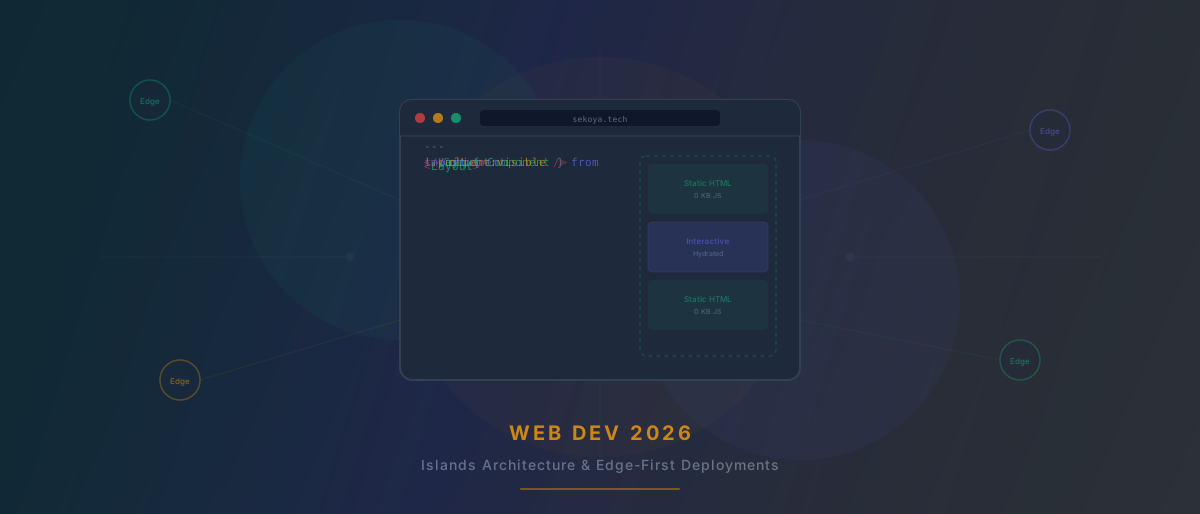
Frameworks like Astro pioneered the concept of shipping zero JavaScript by default and hydrating only the interactive components that need it. This “islands” approach has become the standard mental model for content-driven sites. The result is dramatically faster load times and better Core Web Vitals scores, with no sacrifice in interactivity where it matters.
At Sekoya, we chose Astro for our own website precisely because of this architecture. Pages are pre-rendered at build time, content is managed through type-safe collections, and the only JavaScript shipped to the client is what interactive components explicitly require.
Edge-First Is No Longer Optional
The shift from centralized origin servers to globally distributed edge runtimes is now a baseline expectation for production web applications. Platforms like Cloudflare Workers, Deno Deploy, and Vercel Edge Functions have matured to the point where server-side logic runs within milliseconds of the end user. Combined with edge-aware caching strategies, this means sub-100ms Time to First Byte for users anywhere in the world.
TypeScript Everywhere
TypeScript adoption has reached a tipping point where writing plain JavaScript in a production codebase feels like an unnecessary risk. End-to-end type safety — from database schema through API layer to frontend components — eliminates entire categories of bugs and makes refactoring across large codebases tractable.
What This Means for Your Next Project
If you are planning a new web application or considering a rewrite of an existing one, the fundamentals are clear: choose a framework that supports partial hydration, deploy at the edge, enforce type safety across the stack, and invest in build-time rendering for content that does not change on every request.
These are not theoretical best practices — they are the defaults that high-performing engineering teams are shipping with today. If you want to discuss how these patterns apply to your specific use case, reach out to our team.