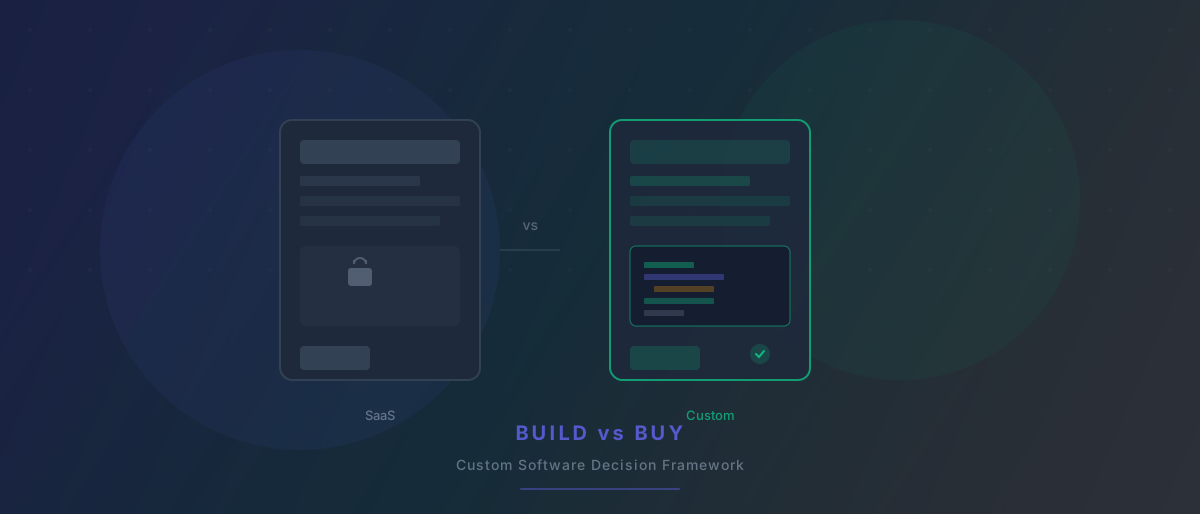
Why Custom Software Still Matters in an Age of SaaS
Table of Contents
The default advice for most businesses today is “buy, don’t build.” And in many cases, that is exactly right. SaaS products handle accounting, email, project management, and dozens of other functions better than any custom solution you could build on your own. But there is a line where buying stops making sense — and crossing it without realizing is one of the most expensive mistakes a growing company can make.
The SaaS Ceiling
SaaS tools excel when your needs align with the majority of the vendor’s customer base. The moment your workflow diverges from the product’s assumptions, you start building workarounds: spreadsheets alongside the CRM, scripts that sync data between tools, manual processes that exist because the software cannot handle an edge case.
These workarounds are invisible technical debt. They slow teams down, introduce errors, and create institutional knowledge that lives in one person’s head rather than in code.
When Custom Software Wins
Custom software makes sense in specific situations:
- Your business process is a competitive advantage. If the way you handle logistics, pricing, or customer onboarding is what sets you apart, encoding that logic into software you own and control protects your edge.
- You have outgrown your tools. When a SaaS product requires more workarounds than actual usage, the cost of maintaining those workarounds often exceeds the cost of building a tailored solution.
- Integration complexity is unsustainable. Connecting five or six SaaS tools through API middleware creates a fragile web of dependencies. A unified custom platform can consolidate these into a single, reliable system.
- Data ownership and compliance matter. In regulated industries, controlling where data lives and how it flows is not optional. Custom software gives you full authority over your data architecture.
The Build Decision Framework
Before committing to a custom build, we walk clients through a structured evaluation:
- Define the core workflow — What is the end-to-end process the software must support?
- Audit existing tools — Where do current SaaS products fall short, and what is the cost of those gaps?
- Estimate longevity — Will this process exist and evolve for at least three to five years?
- Assess team readiness — Do you have the organizational capacity to own and maintain custom software long-term?
If the answers point toward building, we help clients scope a pragmatic MVP that delivers value quickly while establishing a foundation for future iteration.
The Bottom Line
Custom software is not always the answer — but when it is, it can be transformative. The key is knowing when you have crossed the threshold from “SaaS is good enough” to “SaaS is holding us back.” If you are noticing the signs, let’s talk about what a tailored solution could look like.
Related Posts
Welcome to the Sekoya Blog
Introducing the Sekoya.tech blog — a space where we share engineering insights, project learnings, and perspectives on the technologies shaping modern software development.
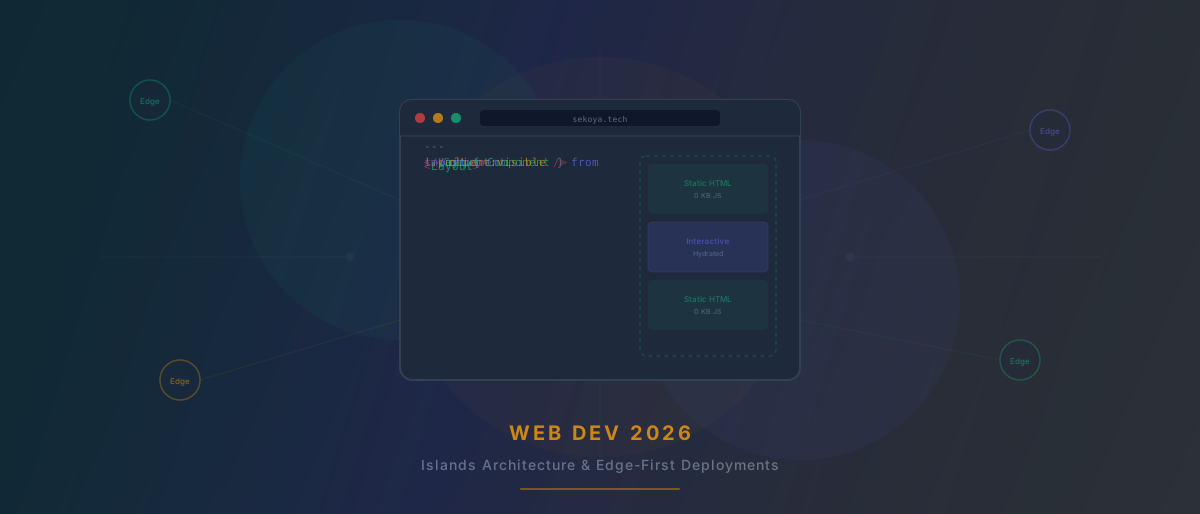
The State of Modern Web Development in 2026
An overview of the frameworks, patterns, and infrastructure choices defining web development in 2026 — from island architecture to edge-first deployments.